go to WASHINGTON FREE PRESS HOME
(subscribe, contacts, archives, latest, etc.)
Sept/Oct 1998 issue (#35)
Radical Cheek
South End Press To Bookstores: Buy Hand Over Fist or Pay Through the Nose
by Doug Nufer, the Free Press
 hile a smaller number of mega-corporations gain more power over what we hear, read, and see in today's media, non-profit publishers like South End Press are being squeezed-- especially as independent bookstores are swallowed by the chains," Michael Moore writes in his introduction to the 1998 catalog of South End Press (SEP). The venerable publisher of Noam Chomsky, bell hooks, Holly Sklar, and many others who've been known to speak truth to power recently celebrated its 20th anniversary. The celebration is somewhat muted, however. In the last 18 months SEP cut staff by one half in order to survive. They also did something which threatens their survival, their credibility, the radical political community, and free speech in America: they went on the agency plan, an ordering system that rewards the rich and punishes the poor.
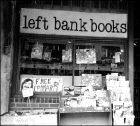
"It's not that you can't have [free speech]; it's just that you have to have the money to do it," says Dierdre McDonald of Left Banks Books Collective, which runs an independent bookstore at Seattle's Pike Place Market and a distributor catering to small independents. Left Bank is also "celebrating" its 25th anniversary by trying to stay alive.
A year ago SEP's distributor, Login Publishers Consortium (LPC), applied this book ordering system--used until recently only by academic presses--to the general bookstore trade. Under the agency plan, a bookstore must order at least 75 books from a list designated by the publisher in order to receive the 40 percent discount off the publisher's price, a discount which it used to receive when ordering as few as five books. The store must order at least 150 of such frontlist books a year to stay on the plan. The plan isn't mandatory for LPC's publishers and the publisher is responsible for choosing which titles must be ordered in bulk. As with the traditional system, the store doesn't have to pay in advance on the agency plan and it may return all unsold books for credit. Although this puts a small publisher at the mercy of apparent big spenders, who might simply order hundreds of books, pay later, and return all but a few copies, LPC claims that more than half of its publisher clients now use the plan.
"We don't put our books on the agency plan because we want them available in bookstores," says Greg Bates of Common Courage Press, which nevertheless uses LPC as a distributor.
Left Bank Left Out
Left Bank Books stopped carrying 21 SEP titles when told that those titles had been placed on the agency plan and so required a large minimum order (other SEP titles Left Bank ordered had not been put on the plan, so the store still carries them). Left Bank could have bought fewer books and received only a 20 percent discount, but it can't afford to make only 20 percent per sale. Not even Left Bank Distribution could afford SEP's terms. After all, titles like bell hooks' Ain't I a Woman and Peter Rachleff's Hard-Pressed in the Heartland don't exactly fly off even an independent bookstore's shelves.
Fortunately (or, unfortunately) however, such titles do have a market niche, which explains why publishers and distributors are shoving volume discount plans down the throats of tiny bookstores. The agency plan came about as a result of a 1997 lawsuit by the National Association of College Stores against Addison Wesley and other textbook publishers. Some defendants settled, others didn't; nonetheless LPC cites pressure from the suit as its reason for making the agency plan available. Textbooks had previously only been discounted 20 percent. With their ready-made market, college bookstores may have had little trouble making ends meet, but many of them resented the whopping discounts other book retailers (especially chains) enjoyed. With many of SEP's titles used in college courses, the agency plan offers a compromise to publisher, distributor, and large bookstore: buy more books and get the regular discount.
Forces Play, Stores Lose
When Left Bank objected that this does nothing for the small independent, SEP's Loie Hayes said "obviously larger forces at play" make the agency plan necessary.
Hayes identifies these forces as major wholesalers like Ingram and chains like Borders (forces which Left Bank also identifies as the main reasons why its business is suffering). Hayes says, "In its first six months, the agency plan succeeded in stabilizing our discount; on the whole we sold fewer units but at higher prices. It had unforeseen and grave consequences, especially for small distributors and small retailers. We really wish this weren't true but because South End's survival is at stake, we can't give up the agency plan if that decision allows the giants to swallow us."
Hayes adds that SEP will be reviewing the financial effectiveness of the plan in twelve months. "In addition to that bottom line consideration, we have always and will continue to be very concerned about the political ramifications of our decisions for the diverse elements of the book wholesaling and retailing community," she says. "We are trying to ride out the tidal wave of change that's affecting the book industry and the whole information/media industry. Because South End's survival is not a sure thing, we must prioritize that, or we will have no solidarity to offer to small wholesellers and retailers who also survive."
"I interpret this as a 'survival of the fittest'/social Darwinian response," says McDonald. "In other words, if you survive, at some later point we will again work with you, but we will do nothing to help you survive now. The question remains, Who will still be around to offer solidarity to in the future?"
go to WASHINGTON FREE PRESS HOME
(subscribe, contacts, archives, latest, etc.)